
By Henry Tseng, DPM – West Covina & Alhambra, CA
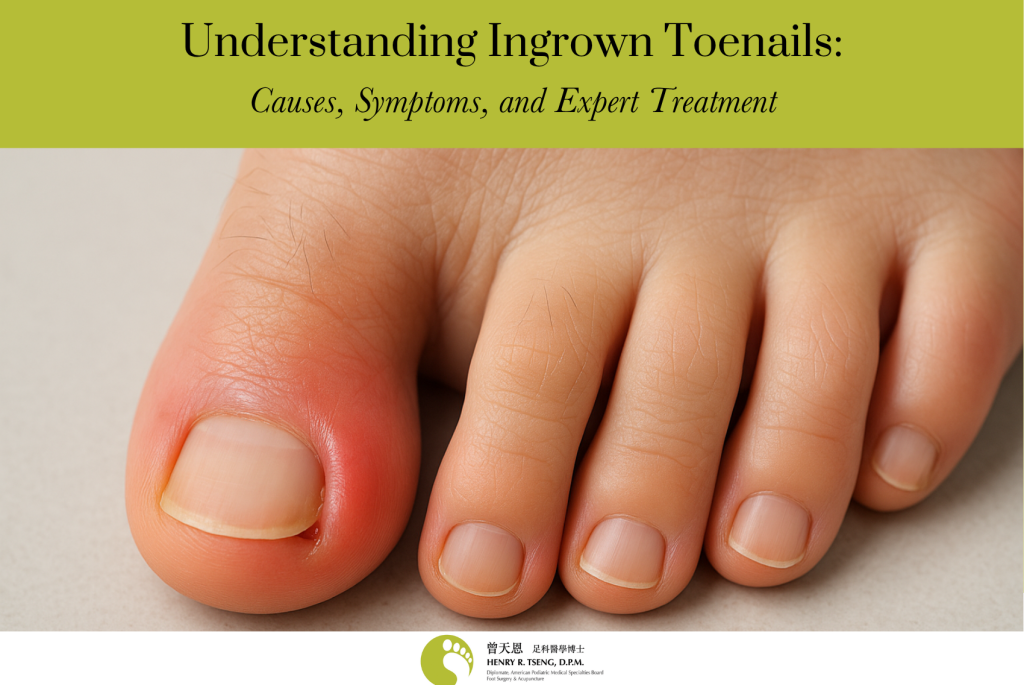
Ingrown toenails are a common but painful condition that can make even walking a challenge. They occur when the edge of a toenail—most often on the big toe—grows into the surrounding skin. While mild cases can cause minor discomfort, untreated ingrown toenails can lead to infection, inflammation, and chronic pain. Fortunately, with professional podiatric care from Dr. Henry Tseng, DPM, relief is within reach.
What Causes Ingrown Toenails?
Several factors can contribute to the development of an ingrown toenail, including:
- Improper nail trimming – Cutting nails too short or rounding the edges can cause them to curve into the skin.
- Tight or narrow footwear – Shoes that squeeze the toes together can force nails to grow abnormally.
- Genetics – Some people naturally have curved or thick toenails that are more prone to becoming ingrown.
- Injury or trauma – Stubbing your toe or other toe injuries can alter nail growth.
- Poor foot hygiene – Moist environments encourage bacterial growth, increasing infection risk.
Common Symptoms
You may have an ingrown toenail if you notice:
- Tenderness or pain along one or both sides of the toenail
- Redness and swelling near the nail edge
- Drainage or pus (a sign of infection)
- Overgrown skin or thickened tissue around the nail
If symptoms persist or worsen, professional evaluation is strongly recommended to prevent infection and complications.
Treatment Options
Dr. Henry Tseng, DPM, offers both conservative and advanced treatment options depending on the severity of your condition:
- Conservative Care: Soaking the foot in warm water, keeping the area clean, and gently lifting the nail edge may help in mild cases.
- Professional Nail Care: In-office trimming and nail-edge relief techniques can remove the offending edge without surgery.
- Partial Nail Removal: For recurring or severe ingrown toenails, Dr. Tseng can perform a simple, minimally invasive procedure to remove part of the nail and treat the nail root to prevent regrowth.
- Infection Management: If infection is present, antibiotics or topical medications may be prescribed.
At both West Covina and Alhambra offices, Dr. Tseng provides gentle, precise care to relieve pain and restore comfort—often on the same day.
How to Prevent Ingrown Toenails
- Trim toenails straight across, not curved.
- Avoid cutting nails too short.
- Wear properly fitting shoes with enough toe room.
- Keep feet clean and dry.
- Schedule routine foot care, especially if you have diabetes or circulation problems.
Q&A: Ingrown Toenails Explained
Q: Can I treat an ingrown toenail at home?
A: Mild cases can sometimes improve with warm water soaks and gentle care. However, if there’s pain, swelling, or drainage—or if you have diabetes—it’s best to see a podiatrist promptly.
Q: Will my toenail grow back after treatment?
A: If only a small portion of the nail is removed, it usually grows back normally. For chronic cases, Dr. Tseng can permanently remove part of the nail root to prevent recurrence.
Q: Is the procedure painful?
A: Local anesthesia is used during in-office procedures, so you’ll feel little to no discomfort. Most patients experience immediate relief afterward.
Q: How long does recovery take?
A: Most patients can return to normal activities within a day or two. Proper wound care will help speed healing.
Q: Can ingrown toenails cause serious complications?
A: Yes. Left untreated, they can lead to serious infections, particularly in patients with diabetes or poor circulation. Early treatment prevents these risks.
Contact Henry Tseng, DPM
West Covina Office
📍 2707 E. Valley Boulevard, Suite 303
West Covina, CA 91792
📞 (626) 330-4866
Alhambra Office
📍 1300 E. Main St., Ste 211
Alhambra, CA 91801
📞 (626) 289-7626
🌐 docfoot.com
📅 Request an Appointment
Take the First Step Toward Relief
Don’t let an ingrown toenail keep you off your feet. Schedule an appointment with Dr. Henry Tseng, DPM, today for expert diagnosis and long-lasting comfort.