
By Henry Tseng, DPM – Podiatry Care in West Covina & Alhambra, CA
Peripheral Artery Disease (PAD) is a common yet often overlooked circulatory problem that affects millions of adults—particularly those over the age of 50. When the arteries that carry blood to your legs and feet become narrowed or blocked due to plaque buildup, your extremities don’t receive enough oxygen-rich blood. One of the most common warning signs? Chronically cold feet.
At the offices of Henry Tseng, DPM, we specialize in diagnosing and managing vascular-related foot problems, helping patients improve circulation, relieve discomfort, and prevent serious complications.
Understanding Peripheral Artery Disease (PAD)
PAD occurs when fatty deposits (plaques) build up along the walls of your arteries, restricting blood flow to your legs and feet. This condition is closely related to heart disease and can signal a higher risk for heart attack or stroke.
Common symptoms of PAD include:
- Coldness in one or both feet
- Leg pain or cramping during walking or exercise (intermittent claudication)
- Numbness, tingling, or weakness in the legs
- Slow-healing wounds or ulcers on the feet or toes
- Shiny skin or hair loss on the legs
- Weak or absent pulse in the feet
Because PAD develops gradually, many patients may not notice symptoms until the disease has advanced.
Cold Feet: More Than Just a Temperature Issue
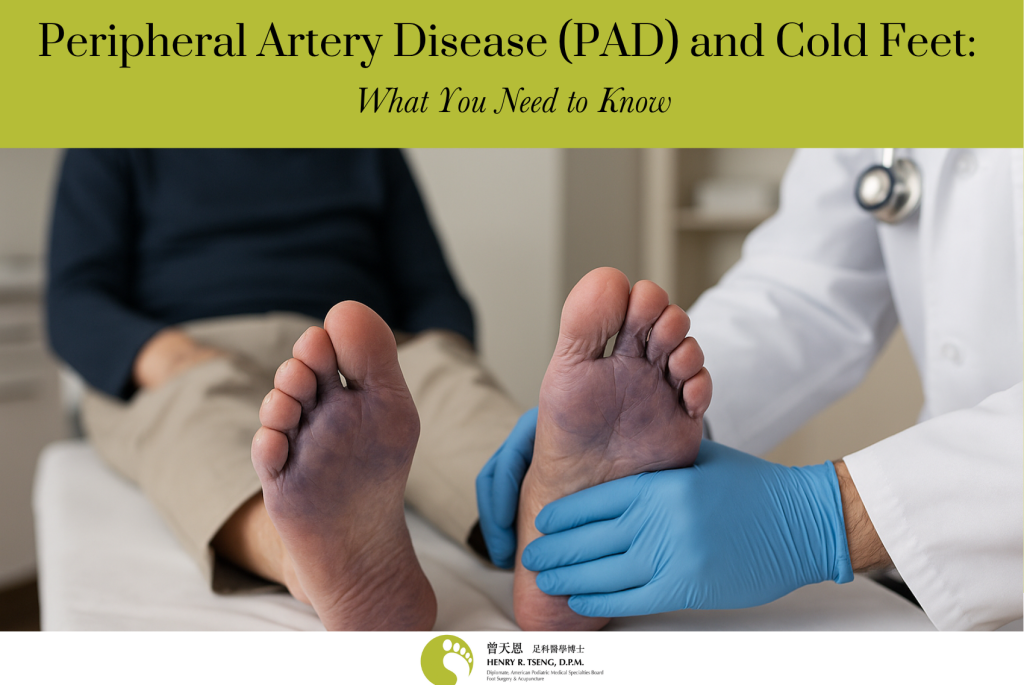
While cold weather or poor footwear can cause temporary cold feet, persistent coldness—especially if it affects one foot more than the other—may indicate poor circulation. This is often due to reduced arterial blood flow.
For patients with diabetes, PAD poses an even greater risk, as limited blood flow can delay healing and increase the chance of infections or ulcers that could lead to serious complications.
How Dr. Henry Tseng Diagnoses PAD
At Henry Tseng, DPM, we use advanced diagnostic tools to assess circulation and identify blockages. Testing may include:
- Ankle-Brachial Index (ABI): Measures blood pressure differences between your arms and ankles.
- Doppler Ultrasound: Visualizes blood flow in the arteries.
- Vascular consultation: In complex cases, patients may be referred for imaging or vascular surgery evaluation.
Early detection allows for treatment that can improve blood flow and reduce complications.
Treatment Options for PAD and Cold Feet
Dr. Tseng creates a personalized treatment plan to improve circulation and reduce discomfort. Common treatment strategies include:
- Lifestyle changes: Regular walking, smoking cessation, and a heart-healthy diet.
- Medication: To lower cholesterol, manage blood pressure, or prevent clotting.
- Foot care: Regular podiatric exams to monitor for ulcers or infections.
- Compression therapy and exercise programs: To enhance blood flow.
- Surgical or interventional procedures (if necessary): Such as angioplasty or stent placement to reopen blocked arteries.
Our goal is not just to manage symptoms but to restore comfort, function, and long-term foot health.
Comprehensive Q&A: Peripheral Artery Disease & Cold Feet
Q: Are cold feet always a sign of PAD?
A: Not always. Cold feet can result from many factors, including hypothyroidism, neuropathy, or even environmental temperature. However, if the coldness is persistent or accompanied by color changes, numbness, or pain, a vascular evaluation is recommended.
Q: Who is most at risk for PAD?
A: People over 50, smokers, diabetics, those with high blood pressure, high cholesterol, or a family history of vascular disease are at the greatest risk.
Q: Can PAD be reversed?
A: While plaque buildup can’t always be completely reversed, lifestyle changes, medication, and treatment can stop the disease from progressing and significantly improve circulation.
Q: What happens if PAD goes untreated?
A: Untreated PAD can lead to non-healing wounds, infections, gangrene, and, in severe cases, amputation. Early detection and podiatric care are essential for preventing these outcomes.
Q: How can I prevent PAD?
A: The best prevention includes not smoking, maintaining a healthy diet, exercising regularly, and managing chronic conditions like diabetes and hypertension.
Q: How does Dr. Tseng help patients with PAD?
A: Dr. Tseng provides comprehensive care that includes circulation assessments, wound management, preventive foot exams, and coordination with vascular specialists when needed.
Contact Henry Tseng, DPM
West Covina Office
📍 2707 E. Valley Boulevard, Suite 303
West Covina, CA 91792
📞 (626) 330-4866
Alhambra Office
📍 1300 E. Main St., Suite 211
Alhambra, CA 91801
📞 (626) 289-7626
🌐 docfoot.com
📅 Book an Appointment
Take the First Step Toward Better Circulation
If you experience persistent cold feet, leg pain, or wounds that won’t heal, don’t ignore these signs. Schedule an appointment with Dr. Henry Tseng, DPM today for a thorough evaluation and compassionate foot care in West Covina or Alhambra.